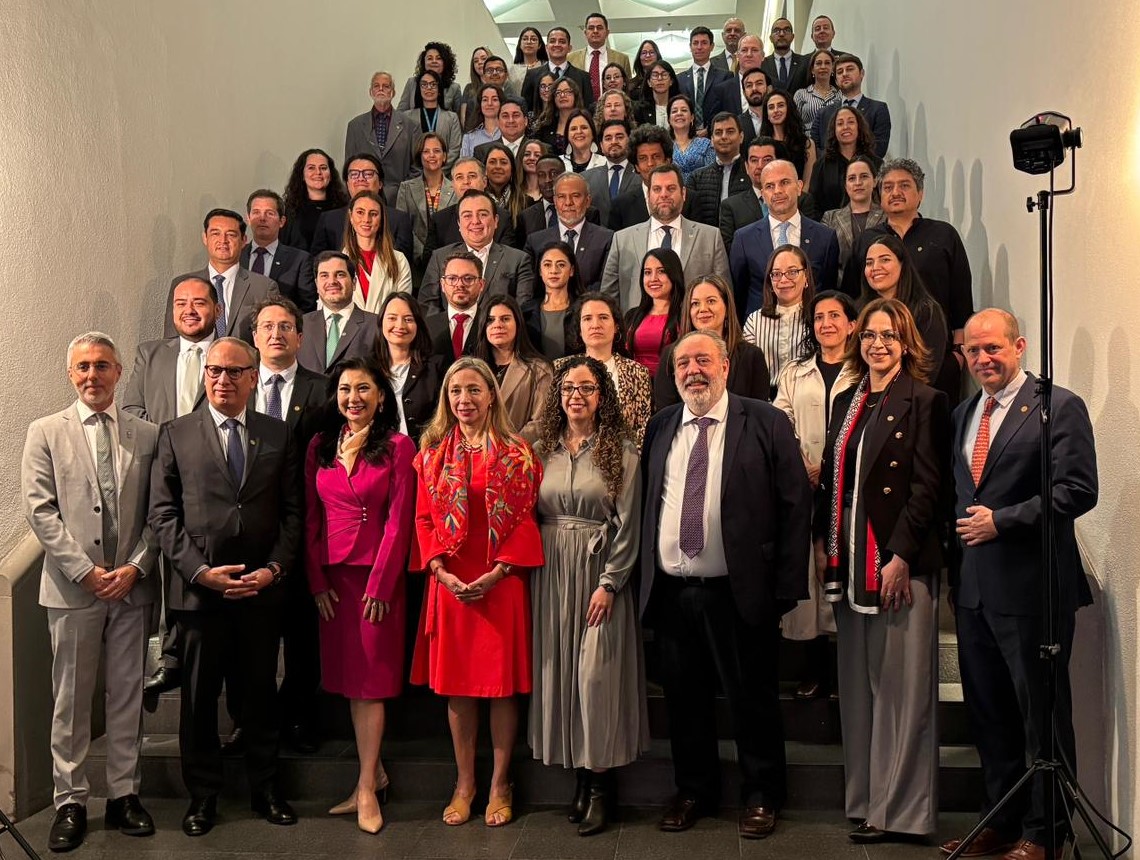
On 27-28 October 2025, the Latin America and the Caribbean (LAC) Forum on Financing for Sustainable Development was held in Mexico City, hosted by the Government of Mexico. Co-organized by the Government of Mexico, through the Ministry of Foreign Affairs and the Ministry of Finance and Public Credit,UNDP and the INFF Facility the Forum gathered more than 70 participants from governments, development banks, international organizations, the private sector and civil society to catalyse implementation of the Sevilla Commitment adopted at the Fourth International Conference on Financing for Development(FfD4) and scale up financing for the Sustainable Development Goals (SDGs).
The main objectives of the Forum included assessing the FfD4 outcomes and the SevillaCommitment for the LAC region considering the region’s specific barriers and opportunities in areas such as fiscal reforms, debt sustainability, innovative finance, biodiversity, climate action and gender equality; strengthening multi-stakeholder collaboration; and advancing country’s financing strategies and alliances.
You can find the event recordings here: English | Spanish (Day 1 | Day 2).Read below for five key takeaways from the Forum:
1. Countries are integrating financial and sustainability planning into their public policy frameworks.
Across Latin America and the Caribbean, countries are putting in place and strengthening national financing strategies and frameworks for sustainable development. Embedded within national institutions, these frameworks are strengthening the integration of sustainable development planning and financing policymaking. Governments across the region are increasingly adopting innovations such as SDG budget tagging, results-based budgeting, social and fiscal impact evaluations, and participatory budgeting mechanisms. These initiatives demonstrate a broader shift toward transparency, accountability, and people-centered public finance.
Officials shared how Integrated National Financing Frameworks (INFFs) are strengthening the integration of national strategies to align planning, budgeting and private investment promotion with the SDGs and the Sevilla Commitment.
Mexico’s Director General in charge of International Fora and Sustainable Finance, Regina Rosales Talamas, highlighted that the country has identified a financing gap of MXN 13.6 trillion for 2023–2030, requiring the mobilisation of around 5% of GDP through its Sustainable Financing Mobilization Strategy. The strategy rests on three pillars: sustainable public financial management, building on SDG budget mapping in place since 2017; public–private finance mobilisation, including the use of thematic bonds; and capacity building on sustainability and gender equality.
From the Dominican Republic, Perla Soto, Manager in the Sustainable Development Department at the Ministry of Finance and Economy, explained that the country’s financing framework integrates planning and budgeting systems into a single structure to support the objective of doubling GDP by 2036. She highlighted advances in aligning public budgets with the SDGs through AI-enabled budget tagging, climate and gender budget classifiers, targeted diagnostics by population group, and efforts to close financing gaps in priority sectors such as education and energy using alternative financing instruments.
Cuba’s Economic Policy Expert at the Ministry of Economy and Planning, Adriano García Hernández, shared that the country’s INFF has focused on aligning diverse sources of finance with national priorities in the context of financing gaps and structural constraints. He outlined key pillars including export promotion, remittance formalisation, financial inclusion, green finance, and modernised public financial management, supported by 24 strategic documents guiding the strengthening of the national financing ecosystem.
2. Impact-oriented finance is a driver of progress on climate, environment and gender equality
Latin America and the Caribbean, home to nearly 40% of the world’s biodiversity, faces growing environmental pressures that threaten development and stability. Ahead of COP30, countries presented integrated financing strategies that align climate, biodiversity, and development, supported by the Sevilla Commitment to redirect public and private resources toward adaptation, ecosystem protection, and risk management, while creating new sustainable economic opportunities.
In addition, the Sevilla and Tlatelolco Commitments call for stronger national gender institutions, predictable financing, and progress on gender-responsive budgeting. In this sense, the region has advanced a robust gender-financing agenda, recognizing women’s economic autonomy and the expansion of care systems as drivers of growth and inclusion. Regional initiatives show that investing in care and equality generates social, economic, and environmental returns.
Building on this, the link between climate, nature, and gender is giving rise to innovative instruments—such as thematic bonds, sustainable taxonomies, fiscal tagging, and investment platforms—designed to scale resources and strengthen governance.
Mexico’s Director General for Global Affairs, Norma Munguía Aldaraca, emphasized that investing in gender equality and environmental sustainability is essential to address persistent inequalities and seize opportunities in strategic sectors. She highlighted Mexico’s efforts to mobilize sustainable resources and advance the global initiative “Investing in Care for Equality and Prosperity” under the Sevilla Platform of Action, aimed at financing national care systems.
From Brazil, Antonio Freitas, Under-Secretary for International Finance and Economic Cooperation, outlined three national priorities: strengthening domestic capacities, developing scalable financial solutions, and integrating climate risk into fiscal planning. He noted the creation of the “super taxonomy” and the Investment Platform for Climate and Ecological Transformation, as well as the establishment of the Circle of Finance Ministers ahead of COP30 to expand climate finance.
Costa Rica’s Vice Minister of Expenditure, Luis Antonio Molina Chacón, underscored fiscal discipline as the basis for public trust, integrating gender and climate indicators into the national budget with key support from international cooperation.
Honduras, represented by Karina Michelle Sánchez, Legal Advisor and Coordinator of International Taxation of the Ministry of Finance, presented progress on gender-responsive budgeting, the creation of the Secretariat for Women’s Affairs, and the institutionalization of legal frameworks for equality, stressing the importance of fiscal justice.
From Paraguay, President of the Development Finance Agency (AFD), Stella Guillén, explained how the national development bank is embedding gender equality across its operations, illustrated by its exclusive guarantee program for women entrepreneurs, which significantly scaled available resources and reduced perceived risk.
The Inter-American Development Bank Group’s Representative in Mexico, Laura Ripani, presented innovative instruments such as resilience clauses, Amazonia Bonds, and foreign-exchange hedging platforms.
Finally, FIRA Mexico, through Carlos Ernesto Rodríguez Gómez, Deputy Director General of Sectoral Intelligence, explained the use of gender bonds to support rural projects led by women, emphasizing the need for gender-disaggregated data and positive incentives to expand gender-impact investing.
3. Innovation can make all aspects of public finance– including debt management – work for sustainable development and catalyse change in the wider financial system
Innovation is becoming a decisive lever to ensure that all components of public finance—including debt management—contribute meaningfully to sustainable development. In a global context marked by overlapping health, climate, and geopolitical crises, public debt levels have risen sharply, particularly in Latin America and the Caribbean, where elevated post-pandemic debt continues to restrict fiscal space and limit investment in social, environmental, and productive priorities.
Across the region, governments are already pioneering innovative solutions that link debt management to climate and development goals: thematic sovereign bonds that align financial flows with national priorities; debt-for-nature and debt-for-development swaps that channel savings into conservation and adaptation; and state-contingent clauses that provide fiscal breathing room during crises.
Combined with next-generation collective action clauses and new mechanisms for disaster-related debt suspension, these tools demonstrate that innovation can simultaneously strengthen fiscal resilience and catalyze systemic change in the wider financial system. Scaling up these instruments—supported by credible fiscal frameworks and integrated financing strategies—will be essential to advancing the principles of equity, resilience, and justice at the heart of the Sevilla Commitment.
Public finance can deliver SDG results when revenues and expenditures are aligned with sustainability goals. Countries are pursuing progressive taxation, results-based budgeting, and transparent climate and gender tagging, while innovative debt instruments - from thematic bonds to debt swaps - are both expanding fiscal space and catalysing wider strengthening of governance, transparency and incentives.
From Paraguay, María Cecilia Facetti, Technical Coordinator at the General Budget Directorate of the Ministry of Economy and Finance, shared the country’s efforts to modernise public financial management by integrating accounting, budgeting, taxation and procurement under a value-for-money approach. She highlighted reforms such as fiscal rules, tax simplification, stronger administration, results-based budgeting and institutional performance evaluation, alongside cross-cutting budget tags for gender, climate and children to improve traceability and accountability.
From Colombia, Jaime Alejando Urrego, Development Economist at UNDP, commented on Colombia’s 2022 tax reform as a concrete example of how legitimacy can translate into policy action. Making tax collection and expenditure patterns explicit fostered debate among government institutions, the private sector, civil society, and international partners, helping to build support for progressive tax reforms and more equitable spending.
Chile’s Finance and International Affairs Advisor at the Ministry of Finance, Catalina Ortíz, highlighted the country’s experience with sovereign thematic bonds, beginning with the launch of a green bond framework in 2019. Since then, Chile has issued green, social and sustainable bonds, reflecting fiscal policy commitment to sustainable development. In 2022 Chile became the first country to issue a sovereign sustainability-linked bond, introducing KPIs on GHG emissions, renewable energy, gender equality and biodiversity, backed by strong governance and external verification.
From the Dominican Republic, Melissa Paulino, Director of Credit Negotiations at the Ministry of Finance and Economy, stressed that the country issued the Caribbean’s first sovereign green bond in 2024 at a lower cost than traditional instruments. She noted that the Green, Social and Sustainability Bond Framework enables diversified thematic issuance aligned with national priorities, while budget alignment is strengthening systematic reporting. She also underscored the need for greater flexibility in traditional IFI instruments, including the use of disaster clauses, and for a stronger regional voice in advocating these reforms.
Barbados’ Fiscal Risk Specialist at the Ministry of Finance, Alton Best, explained that high disaster risk and limited fiscal space make innovative financing instruments essential for small island developing states. He highlighted Barbados’ use of debt-for-climate and debt-for-nature swaps to create fiscal space for resilience investments in water management and marine conservation as well as the establishment of the Blue Green Bank in partnership with regional actors.
4. Unlocking private capital through country platforms and innovative financing instruments
Private finance will only scale with trust, clear standards, and investable pipelines anchored in national strategies and Country Platforms. Across the region, development banks, stock exchanges, and financial councils are advancing sustainable-finance taxonomies, governance standards, and reporting frameworks that de-risk projects and strengthen investor confidence. With an annual SDG financing gap of USD 650 billion–1.3 trillion, mobilizing private capital has become essential.
Aligned with the Sevilla Commitment, countries are using blended finance, catalytic funds, guarantees, insurance, and hedging tools to attract investment in priority sectors such as resilient infrastructure, energy transition, biodiversity, circular economy, and care systems. Country Platforms—one of Sevilla’s core innovations—help translate national plans into investable portfolios, aligning public, private, and multilateral actors around measurable outcomes.
In a context of declining concessional flows, the region’s development banks remain key assets with strong leverage capacity and the ability to set standards for responsible investment. To close the remaining gap, countries must harmonize sustainability standards, strengthen impact measurement, and ensure that every mobilized dollar advances clearly defined development goals.
From Brazil, Marcelo Miterhof, Advisor to the Managing Director of BNDES, explained that the country’s development bank, managing over USD 100 billion in assets, is the main financier of sustainable projects. He highlighted that the Brazil Investment Platform has mobilised USD 3 billion for nature-based solutions and the energy transition, stressing the role of Brazil’s sustainable taxonomy to steer capital toward national priorities.
System-wide coordination is essential to scale sustainable finance in Mexico, as emphasized by Alba Aguilar, Chief Executive Officer of the Mexican Council for Sustainable Finance. She described the Council’s role as an enabling institution that aligns public and private stakeholders, promotes international best practices, and works closely with the Ministry of Finance to support a more resilient and sustainable financial system, highlighting the importance of private capital, regulatory innovation, and impact measurement.
Access to capital markets for companies of all sizes has been a core objective behind the creation of Mexico’s Bolsa Institucional de Valores (BIVA). María José Berrueta, leading Sustainability and ESG Listings at BIVA, highlighted how the stock exchange enables thematic bond issuance while strengthening disclosure standards, investor confidence, and corporate governance capacities, helping to build a credible pipeline of issuers that combine profitability with measurable impact.
Ismael Villanueva Zúñiga, Head of the Emissions and International Relations Unit at NAFIN, explained that Mexico’s development banks, NAFIN and Bancomext, are increasingly financing ESG-aligned projects related to green transport, solar energy, women-led enterprises, and sustainable value chains. The banks combine tailored financial products with technical assistance and capacity-building to enhance competitiveness and embed ESG practices.
Latin America’s development banks have become more inclusive in recent years, particularly in expanding support to MSMEs and digital sectors. Iván Vicente Cornejo Villalba, National Coordinator of ALIDE (Latin American Association of Development Finance Institutions) in Mexico, underscored the need for greater regional interoperability through shared taxonomies, stronger gender integration in sustainable finance, and the development of local industries.
Sustainability is now integral to competitiveness in private banking, as explained by Valeria Cantú de León, Vice President of Sustainable Finance at HSBC Mexico. She highlighted the bank’s net-zero commitment by 2050 and its global ambition to mobilise up to USD 1 trillion in sustainable finance by 2030, stressing the importance of a range of sustainable finance products, including thematic bonds and loans, trade finance instruments, and guarantees.
5. Financing the future LAC wants
Participants agreed that global commitments must translate into national action through country-led financing strategies and frameworks. Governments, public development banks, private sector, civil society and partners all have roles to play to channel and de-risk financing for impact.
They called for continued south-south exchange and learning, a regional repository to track Sevilla progress, and stronger coordination on debt, climate finance, and financial reform. The region should align global pledges with national realities, mobilise private capital through transparent frameworks, and speak with one voice to position LAC as a key player in reshaping global finance.
The forum was a first regional step toward implementation—aimed at aligning visions, identifying priorities, and strengthening alliances—to ensure that the Sevilla Commitment translates into concrete results that benefit people and protect the planet.
Key next steps include:
- Advancing the implementation of the Sevilla Commitment at country level through country-led financing strategies and frameworks that strengthen the integration of sustainable development planning, budgeting and financing policymaking.
- Systematically documenting and sharing LAC experiences and innovations in financing for sustainable development to support peer learning.
- Strengthening regional follow-up on FFD4 including through continued south-south exchange.
- Strengthening national implementation capacities and aligning regional financing strategies with the commitments adopted in Sevilla, including on fiscal reforms, debt sustainability, climate and biodiversity action, and gender equality.






.png)