1. 概览
融资景观评估全面描绘了现有的融资来源和类型及其各自对可持续发展的贡献。它与融资需求评估(侧重于需求侧)相辅相成,有助于识别融资缺口FN 1。
正如《亚的斯亚贝巴行动议程》所强调的那样,有广泛的公共、私人、国内和外部资源可以帮助推进国家可持续发展优先事项。它们的作用各不相同,通常不能相互替代,但都能为实现可持续发展目标做出贡献。例如,从国家预算的角度来看,汇款流入无法弥补发展援助的减少。但它们可以支持家庭消费、教育和医疗,以及对中小企业的投资,从而有助于实现可持续发展优先事项。
2. 融资景观评估的价值
国家综合融资框架(INFF)内的融资景观评估可以帮助决策者:
更好地了解目前在该国支出/投资的融资类型和规模及其各自对可持续发展优先事项的贡献;
确定机会,以动员更大规模的融资和/或提高现有资源对可持续发展的影响;
评估当前融资的可持续性,并标记重大风险或潜在约束;
评估当前公共融资的效率并确定重新分配的潜力;
拓宽融资战略的重点,从公共融资转向利用公共政策来杠杆化更广泛融资来源和工具的贡献;
使管理不同类型融资的当局意识到它们各自对可持续发展的影响;
提高专家和专注于融资的决策者之外的非专业人士及协调实体对国家特定融资问题的认识和理解。
融资景观分析应与国家综合融资框架(INFF)评估和诊断模块的其他要素结合起来看待。结合融资需求、风险和约束条件分析的结果,景观评估可以帮助政府在不同融资政策领域优先考虑政策变革和改革。
3. 范围与局限性
分析融资景观需要:(i) 对所有类型的融资(公共和私人、国内和外部)及其趋势进行全面评估;(ii) 对其在国家确定的发展优先事项和可持续发展目标(SDGs)方面的可用性进行分类分析。FN 2 表1列出了应纳入的融资类型、相关参与者及其对发展成果的贡献示例。融资流的特征和任务各不相同,图1进一步直观展示了它们各自对可持续发展成果的贡献。
公共融资包括政府收入和税收、公共借款(优惠和非优惠)、发展合作(官方发展援助、南南合作、三方合作及其他相关官方资金)作为公共融资来源,以及公共支出和投资(预算内及预算外投资,如国有企业和国家开发银行)。公共融资的驱动力是公共政策目标(如公平、配置效率和稳定),并直接促进教育、卫生、社会保障及其他可持续发展优先事项的进展。某些公共融资工具(如绿色债券)直接将借入的资源承诺用于绿色或可持续投资。
私人融资涵盖直接投资(国内和外国)及其融资方式(来自国内和国际来源的股权和债务融资)。它主要以营利为导向。它通过创造就业、增长和缴纳税款来增加财政空间,以及在农业、工业、技术、基础设施、能源等领域进行直接投资,为可持续发展做出重要贡献。然而,私人投资并不总是与可持续发展保持一致;公共政策在考虑权衡取舍并鼓励与已确定的国家优先事项保持高度一致方面发挥着至关重要的作用。
表1. 范围概览——类型、流向、参与者、成果
私人融资中有一小部分属于非商业性资金,包括影响力投资者(旨在同时实现财务回报和非经济影响的投资者)和慈善事业。尽管影响力投资规模在不断增长,但与其他金融流相比仍然较小FN 3,不过根据项目不同,它仍能产生重大影响。慈善事业通常(尽管并非总是)与公共政策目标和国家优先事项保持一致。
混合融资结合了公共和私人融资FN 4,在私人投资基于风险回报率不具备竞争力,但对可持续发展具有积极溢出效应(例如在基础设施领域(图1)或开发新市场时)的情况下,这种融资方式尤为有用。
汇款是家庭收入的来源之一,但在景观评估中值得强调,因为它们提供了获取外汇的渠道,从而也支持了国家的国际收支平衡。汇款可以支持家庭需求,包括教育和医疗支出,也可用于支持家庭商业投资,如中小企业。与其他许多国际收支流相比,汇款的周期性通常较弱(新冠疫情等全球性冲击除外)。此外,也有人呼吁发行侨民债券,这是一种专门针对侨民的政府借款工具。然而,迄今为止,成功发行侨民债券的案例寥寥无几。
在所有情况下,公共政策和行动(在国家和国际层面)都设定了有利环境,决定了融资流如何为发展优先事项做出贡献。
图1. 实现可持续发展的公共和私人融资连续体及非金融手段
数据覆盖范围和可比性是融资环境评估中常见的挑战和局限性。全面分析需要来自广泛来源的数据。然而,所需数据,特别是关于国内私人投资、公共实体、非政府组织和慈善机构的投资与支出的数据,可能是片面的或无法获得的。同样,衡量融资流的影响,即建立融资流数据与成果之间的联系,并不总是可行的。专栏1列出了最常见的挑战,第4.2节列出了为应对或减轻这些挑战的影响可以采取的步骤。
Uncertainty. Financing policy decisions are undertaken in a context of risk and uncertainty. Not all events can be anticipated, or their potential impact fully quantified. Technologies and instruments such as enhanced projections and early warning systems can help to close knowledge gaps and to better deal with inherent uncertainty, in addition to investing in system resilience more broadly.
Varying understanding of different types of risk. Diagnostics tools may be more developed for some types of risks than others. There are also limited tools for understanding and addressing the systemic nature of risk or to explore interlinked, long-term effects. Improved coordination, common methodologies, terminologies and metrics for the analysis of risk data between sectors is much needed, including interoperability between systems to collect and analyse data across sectors, e.g. between climate transition risk, disaster risk, and financial risk assessments.
Limitations in risk information. For example, large gaps in data and information on vulnerability (both social and environmental) are widely recognised as limiting factors in risk reduction as they prevent a thorough understanding of patterns of vulnerability and exposure to risk. Local stakeholders’ experience and insight can often supplement available evidence and help fill gaps in relevant data and information.
Global systemic risks. National risk assessments can guide domestic policy action, but they cannot reduce all risks faced by a national economy, nor reduce globally systemic risks. Risk assessments at the national level must be complemented by regional and global systemic risk assessments and measures, with an emphasis on the needs of the poorest and most vulnerable countries.
4. “操作指南” - 实践中的融资环境评估
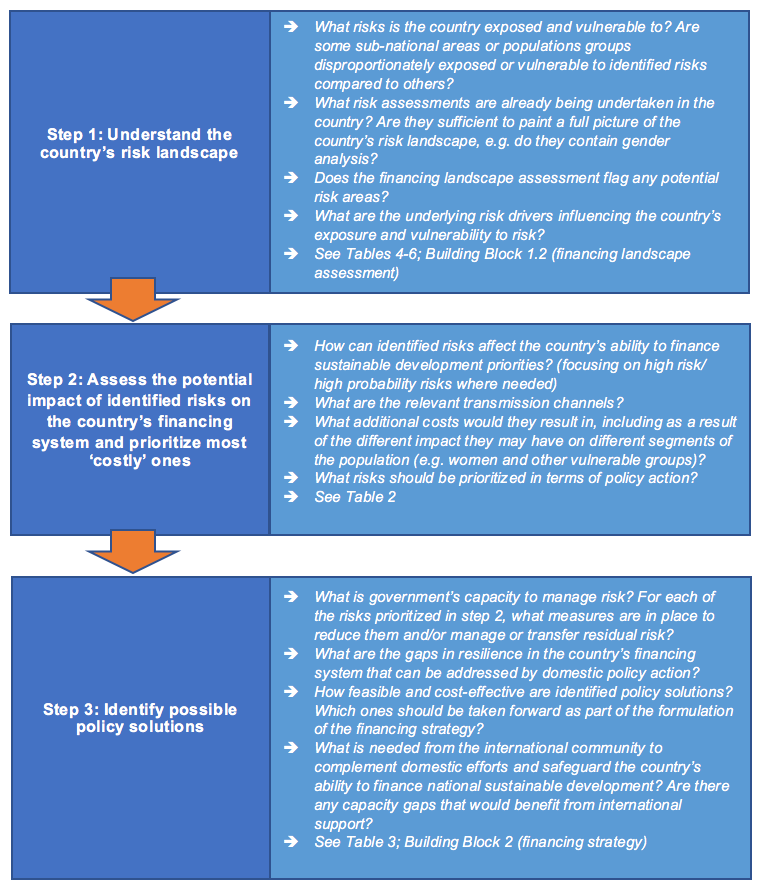
图2列出了在综合国家融资框架(INFF)内进行有效融资环境评估的主要步骤。这些步骤包括:对总体融资环境(公共、私人、国内和国际融资)进行评估;分析不同部门和发展优先事项的融资使用情况(以建立现有资金流和融资缺口的基准);以及与风险和约束条件评估建立联系。
与相关利益相关者(如“构建模块1:评估与诊断:概述”表1中所列的利益相关者)进行磋商,应作为定量数据分析的补充,特别是在存在数据缺口和/或当地实践经验能够为解释融资趋势和分配提供见解的情况下。
图2. 分步指南
The Sendai Framework for Disaster Risk Reduction 2015-2030 was adopted by UN Member States on 18 March 2015 at the Third UN World Conference on Disaster Risk Reduction. It aims to guide multi-hazard management and reduction of disaster risk in development at all levels and within and across all sectors. While the scope of risk assessments in the context of INFFs goes beyond disaster risk, several principles and notions put forward within the Sendai Framework can be used to inform effective incorporation of risk in INFF design and implementation. The most relevant ones include:
Development needs to be risk-informed to be sustainable. Similarly, development financing policies and strategies must be risk-informed to be sustainable and effective in supporting the achievement of identified priority outcomes.
Risks must be periodically assessed in all their dimensions. INFFs provide a framework to think about development financing in an integrated and holistic manner, they are not a one-time undertaking; their value is in facilitating a ‘process approach’ to the design and implementation of development financing policies and reforms. Regular assessment of the financing landscape and risk is a crucial aspect of this process including to facilitate consideration of emerging and new threats and anticipating the reduction of their impact.
The primary role to reduce disaster risk lies with the State but all stakeholders, including the private sector, have a responsibility to contribute. INFFs are government-led, placing the primary responsibility for formulating necessary financing policies and reforms on the State; however, they can also be used to strengthen collaboration with non-state actors, encouraging a more risk-informed approach to development by all relevant stakeholders.
Risk reduction requires all-of-society engagement and partnership, paying special attention to people who may be disproportionately affected by shocks and disasters. At the core of INFF risk assessments is the analysis of the potential impact that various shocks and disasters may have on a country’s ability to finance sustainable development effectively over time. This requires a thorough understanding of the risk profiles of, and the disproportionate effects that shocks may have on different population groups, including women and other vulnerable groups – which in turn calls for participation of a wide range of stakeholders in the exercise. FN 5
Underlying risk-factors should be addressed cost-effectively through investment in prevention and risk management, instead of relying primarily on post-disaster response and recovery. INFFs encourage the long-term horizon thinking that is required to strengthen resilience and preserve sustainable development achievements overtime.
Support from developed countries and partners to developing countries needs to be tailored according to nationally identified needs and priorities. INFFs can support countries to identify key needs and inform related policy asks of development partners and global policy processes.
第1步:融资环境的总体评估
总体分析旨在评估可用于国家优先事项的公共、私人和外部资金的规模与趋势,并寻求识别关键的融资机遇与挑战。它有助于决策者获得一个整体图景,从而支持在不同融资领域进行优先排序,并为融资战略提供参考。图2中列出的问题有助于聚焦分析,并以易于理解的格式向非专业人士和协调实体展示研究结果。
第4.3节和表3概述了国际社会为支持此类评估所提供的工具。其中包括:综合性工具,如联合国开发计划署(UNDP)的发展融资评估(DFA),以及联合国西亚经济社会委员会(ESCWA)的交互式可视化SDG成本计算器、SDG融资模拟器、SDG融资求解器、SDG融资缺口估算器和SDG互联互通工具包。此外还包括更具针对性的工具,如联合国贸易和发展会议(UNCTAD)的投资政策审查或国际货币基金组织(IMF)的债务可持续性分析;部门特定工具,如世界卫生组织(WHO)的卫生融资国别诊断;以及跨领域工具,如性别响应预算、气候融资诊断和灾害风险知情预算审查。
融资的规模、结构及主要趋势
公共财政。公共财政处于决策者的直接控制之下,可用于投资国家优先事项和可持续发展目标(SDG)。财政账户提供了公共部门收入、支出和融资(借款)的全面图景,包括公共财政主要来源的数据(例如:税收;费用及其他非税收入;赠款,如预算内官方发展援助(ODA);以及来自国内和外部的公共借款)。图3展示了基于国际货币基金组织(IMF)第四条款评估的塞拉利昂政府支出和融资的例子。
除了这些由政府直接控制的资源外,用于资助公共政策目标的其他类型公共财政还包括预算外官方发展援助(ODA)及其他发展合作,以及国有企业(SOE)和国家开发银行(NDB)的支出与投资。国有企业和国家开发银行可能是关键可持续发展领域(如能源、水务和卫生设施)的主要参与者。它们的融资结构,包括其与中央政府的关系,应作为国家融资环境分析的一部分予以考虑。在许多国家,国家开发银行因其明确的发展使命和直接资助公共政策目标的能力,发挥着重要作用。有关此类公共机构的数据可从各种国家和/或国际数据库中获取(见第4.2节中的表2),并可补充财政账户数据,从而勾勒出融资环境评估中公共财政方面的完整图景。
图3. 政府支出融资(占GDP百分比):以塞拉利昂为例
Sources: Bova and others (2016) and staff estimates. IMF (2016) Analysing and managing fiscal risks – Best Practices
私人金融。决策者还可以采取措施,动员并更好地使现有的私人投资 与可持续发展优先事项保持一致,并扩大私人融资的规模。私人金融在很大程度上取决于更广泛的宏观经济发展,分析起来更为复杂,且与上述公共财政相比,数据往往更为有限。可以考虑使用广泛的指标来评估金融部门的发展及其为可持续发展投资提供融资的能力。
在实际或直接投资方面,许多国家没有收集国内企业总投资的全面数据,因此可能需要使用代理指标进行估算。私人固定资本形成总额涵盖了私营部门对经济资本存量的增加,通常被用作私人投资的代理指标。这包括国内直接投资和绿地外商直接投资(FDI)。
在资金流方面,对私营部门的国内信贷是国内融资来源的一个指标。国内投资也可以通过私人外部借款在外部融资。外商直接投资(FDI)流也包含金融要素,例如公司内部贷款(另见图5)。跨境证券投资流也是可量化的,主要代表国内证券交易所的二级市场交易。
此外,金融部门规模(如金融资产价值;银行存款,占GDP百分比)、结构(如银行、非银行、金融市场持有的资产份额,如图4所示)、广度(如普惠金融)和深度(如长期融资的可用性)等指标,可以阐明金融部门作为将资源引导至投资的来源和机制的作用。它们还可以标记出风险和/或挑战领域,从而分别为风险评估和约束条件评估提供参考(见构建模块1.3和1.4指南)。
图4. 金融体系结构(占金融资产总额的百分比):以泰国为例
Source: https://drmkc.jrc.ec.europa.eu/inform-index
Disasters impact men and women differently. Research shows that more women than men die from natural hazards and that this is mostly due to women’s unequal socioeconomic status – meaning that disasters can widen existing gender inequalities. In specific sectors too (such as agriculture), the typical roles and responsibilities that men and women have affect their respective coping abilities and resilience levels. Exploring such differences in vulnerability is key in being able to fully understand a country’s risk and vulnerability landscape and will result in more efficient and cost-effective policy action.
In Myanmar, an impact assessment of Cyclone Komen on agriculture and rural livelihoods was undertaken following a gender-responsive process. By exploring gender aspects in agriculture – such as the difference in roles, wages, access to credit and training, land ownership – the assessment was able to identify and explain the differences in the cyclone’s impact on men and women. In so doing it supported more effective response and recovery interventions, as well as long-term resilience measures able to strengthen both men and women’s capacity to cope with future disasters.
Sources: UNISDR, UNDP and IUCN (2009) Making Disaster Risk Reduction Gender Sensitive – Policy and Practical Guidelines; Myanmar Ministry of Agriculture and Irrigation, Ministry of Livestock, Fisheries and Rural Development, FAO and WFP (2015), Agriculture and Livelihood Flood Impact Assessment in Myanmar
Understanding underlying drivers of risk
Underlying risk drivers specific to a country can provide insight into the root causes of exposure and vulnerability to risk. Their identification can help pinpoint factors that may be increasing exposure and vulnerability across multiple risks.
Risk drivers include:
Economic factors, such as GDP composition; levels of savings and investment; level of diversification of the economy; level of openness of the economy; exchange rate regime; size and composition of the financial sector (including the insurance sector); underinvestment in asset protection (including by private sector and households); digital inclusion; unemployment rates; infrastructure quality and availability.
Geographical, climatological and environmental factors, such as physical location of the country; land use; urbanisation trends; climate change and variability; environmental degradation and biodiversity loss.
Institutional factors, such as limited understanding of risk; limited capacity, resources and/or systems to address risk; non-risk informed policies that unintendedly create risk; gaps in risk governance (including lack of clear roles and responsibilities around who ‘owns’ different risks and who should share responsibility in managing them, corruption, non-accountable and non-inclusive decision-making process); limited information sharing between relevant agencies (e.g. between economic and disaster/ environmental agencies); lack of incentives to ‘reward’ pro-active risk-related action (prior to shocks and disasters); or broader political factors, such as political stability, representation, and related issues.
Social factors, such as demographic profile and trends (e.g. youth bulge, ageing population); health and education and literacy levels; participation of civil society; e-participation; protection of civil and political rights; levels of poverty, discrimination and inequality (e.g. in relation to income, gender, ethnicity, race, disability).
Some of the tools listed in Section 4.2 include guidance on how these underlying factors can be identified. For example, credit rating agency reports usually consider structural features that affect sovereign creditworthiness, such as governance and political capacity and GDP levels, and show how external investors view risk in a country. The Intergovernmental Panel on Climate Change (IPCC) has published guidance related to factors that can increase countries’ exposure and vulnerability to climate change hazards in particular. The UN Common Country Analysis (CCA) guidance includes steps that can be used to identify economic, environmental and institutional factors that can influence exposure to a wide range of risks.
步骤 2:融资的分配与使用、融资缺口以及与可持续发展成果的联系
对当前的融资分配和使用情况进行更细致的拆解,有助于政策制定者更好地理解其影响,以及这些融资如何促进(或阻碍)既定国家发展优先事项的实现。这也为计算融资缺口(例如在行业或项目层面)提供了基准。它有助于回答以下问题:
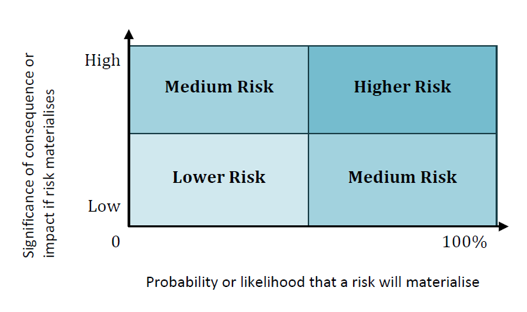
Figure 5a. Example of risk matrix used in risk assessments related to money laundering and terrorism financing
Source: FATF national ML/TF risk assessment guidance
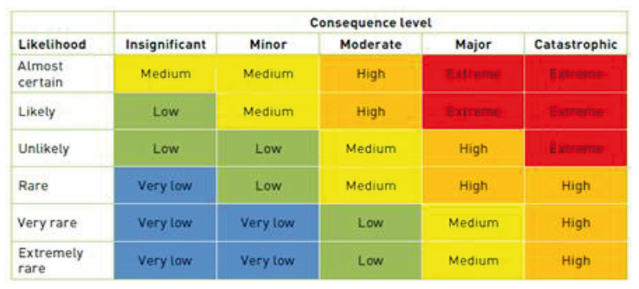
Figure 5b. Example of risk matrix used in disaster risk assessments
Source: UNDRR National Disaster Risk Assessment
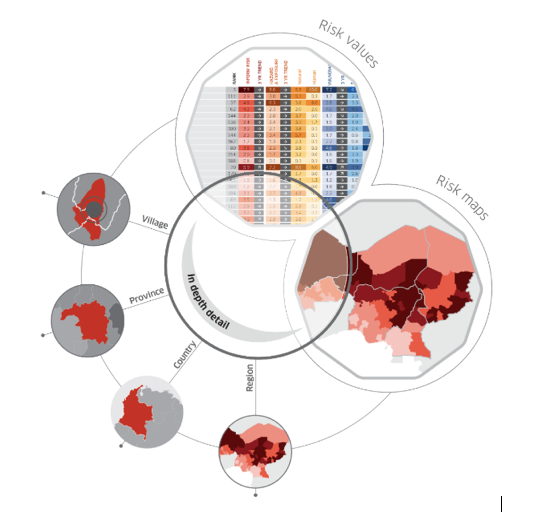
Risk indices. Where direct comparisons between risks are possible, index-based approaches can also be used to support prioritisation (being mindful of the methodologies used, including in relation to the weights assigned to different indicators). The INFORM risk management index, for example, can be used to assess exposure, vulnerability and coping capacity related to a range of natural and man-made disasters, such as earthquakes, floods, tsunamis and tropical cyclones. UNCTAD’s Financial Conditions Indicators Index provides insight on key aspects of financial stability, by bringing together information on different financial and macroeconomic indicators, such as prices, volatility, foreign exchange rates, debt service ratios and capital flows, in a single assessment.
Having established a more limited number of major risks, the analysis of the potential impact on the country’s financing system can be narrowed down accordingly.
Linking risks to their potential impact on the country’s financing system
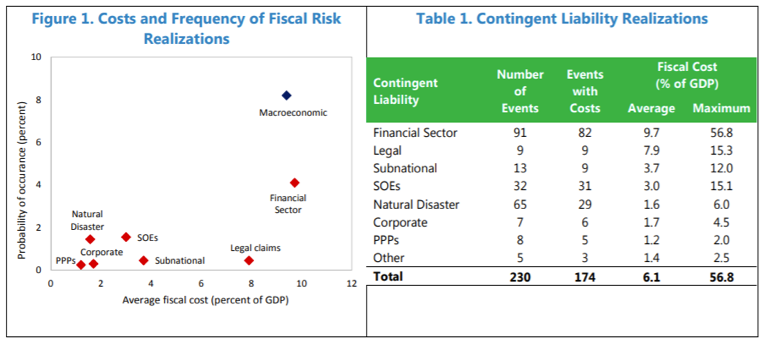
While some risks are already incorporated into existing economic and financial assessments, others will require additional analysis. For economic risks, impact on financing should be straightforward to infer and may be explicit in existing assessments. For example, risk matrices included in IMF Article IV Consultation reports highlight links to fiscal and financial sustainability. Risk assessments related to the use of specific financing instruments, such as PPPs, tend to focus on their potential fiscal implications. Countries also apply a range of approaches to quantify contingent liabilities related to fiscal risks, including assessments of historical data, where available, market information, and stochastic simulations or option pricing models. FN 8
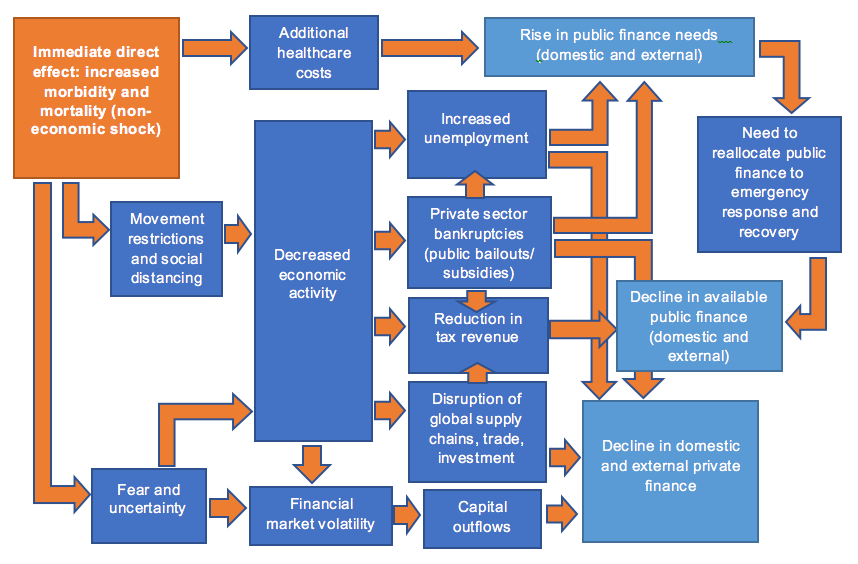
For non-economic risks, dedicated risk assessment tools and approaches often employ a broader lens and focus on the potential impact of shocks and hazards on sustainable development outcomes at large, which then need to be incorporated into economic and financial analyses. However, examples exist of how the economic impact of non-economic shocks and hazards may be assessed, especially in relation to disaster risk. For example, damage and loss databases (such as DesInventar Sendai) can provide useful insight into the monetary impact of past disasters. In 2015, the Global Assessment Report on Disaster Risk Reduction outlined an approach to assess the macro-economic and public finance repercussions of disasters, via the use of models that take into account major interlinked transmission channels (such as the decline of production capacity due to capital loss on the supply side, the decline in income and asset value on the demand side, the increased need for public expenditure in response, recovery and reconstruction combined with decreasing public revenues due to reduced taxes and fees, and the resulting worsening of the fiscal balance which in turn can further negatively impact the macro-economy via for example increasing debt).
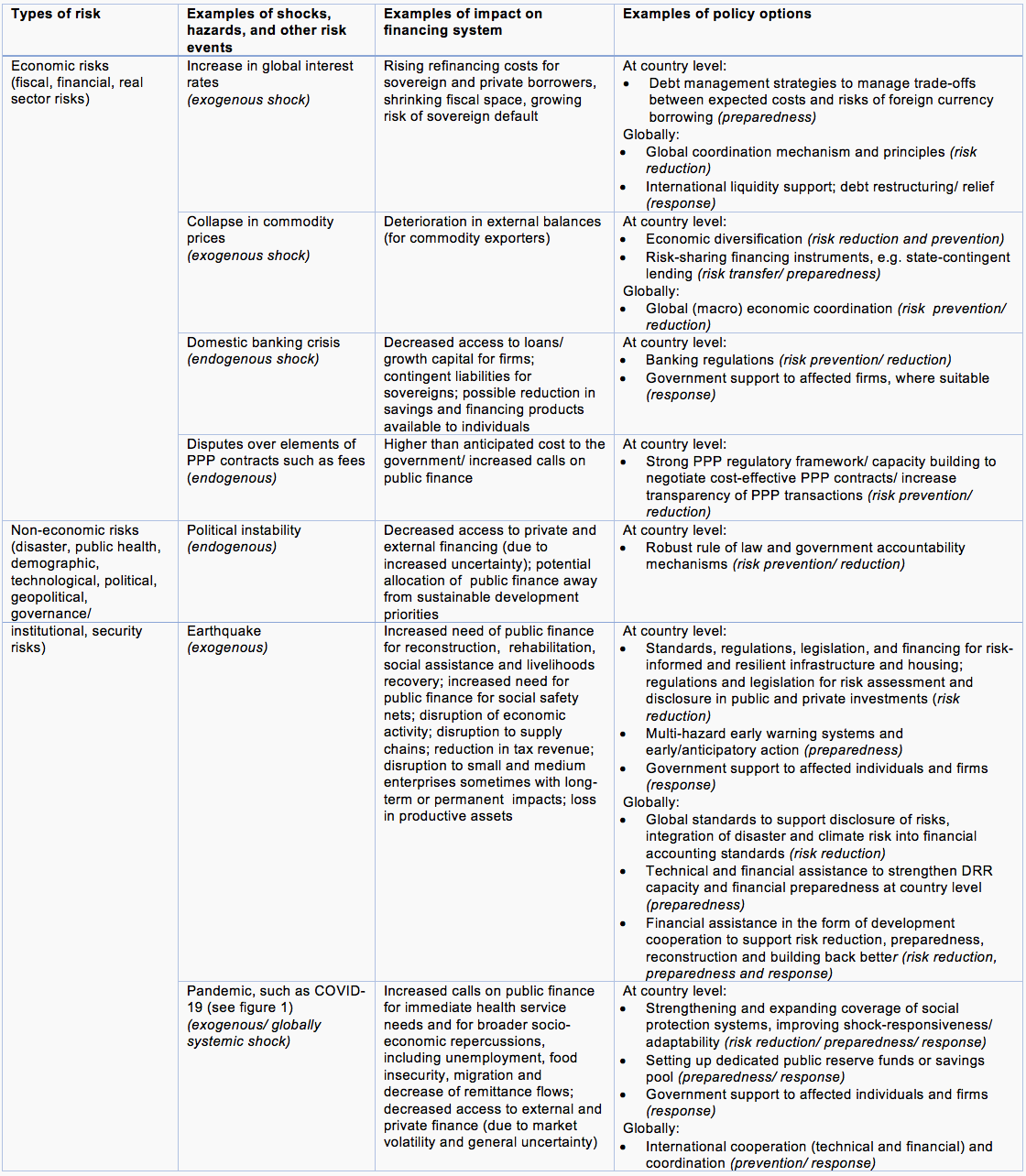
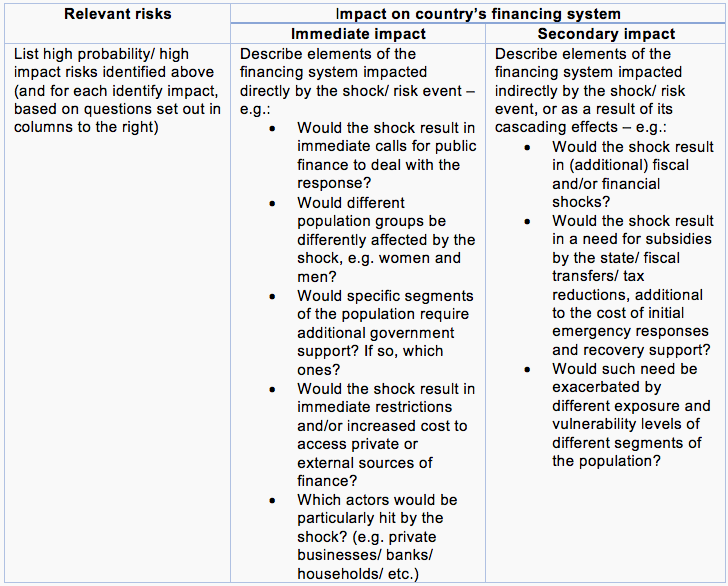
To bring together analysis of different types of risk and support prioritisation, information can be compiled in a simple format such as that proposed in Table 2. FN 9 Identifying the most relevant transmission channels (through which different shocks may impact the financing system) will encourage consideration of interlinkages between risks and the additional costs to the state, including through their differentiated impact on different segments of the population. FN 10 The higher such costs, the stronger the case to invest in policies to address the risk.
Table 2. Template for mapping the potential impact of identified risks on a country’s financing system
Step 3: Identifying possible policy solutions
Some risks can be prevented, some reduced. Residual risks may be transferred or may have to be managed and absorbed once they are realized. In some cases, this can be accomplished by discrete policy interventions (for clearly identified risks with no systemic impact), in other cases it will require more complex approaches, focused on enhancing overall resilience of a country’s financing system.
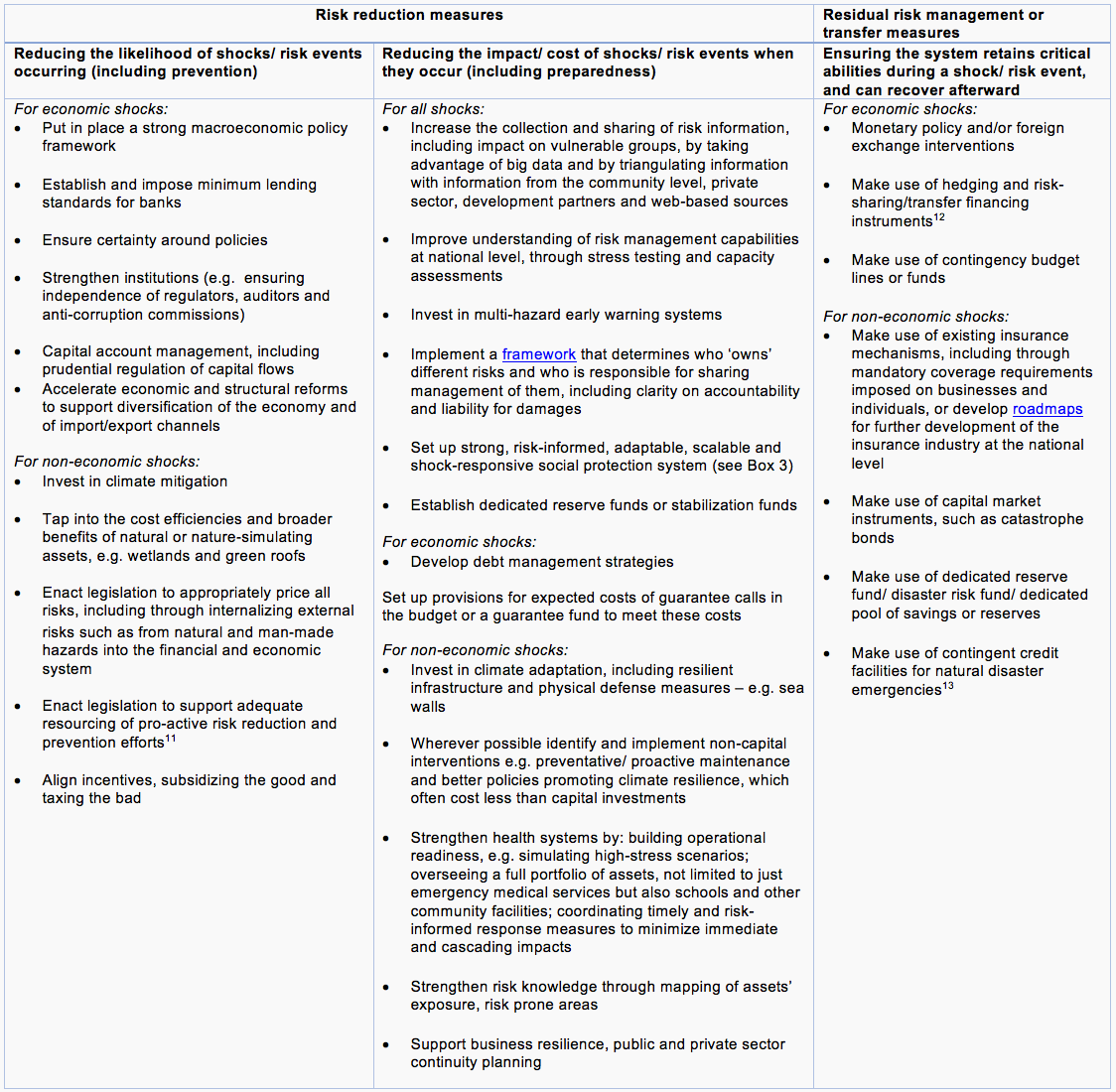
A mapping of existing policies to deal with risk in all sectors may have been undertaken as part of the initial scoping exercise within the INFF inception phase; if so, it should be referenced here, especially in relation to policies and measures related to the risks prioritised in step 2. Table 3 provides an illustration of relevant policy measures, but not all will be relevant or feasible in all contexts. They include policies related to the use of specific financing instruments as well as broader risk-related policies, such as investing in resilient infrastructure and setting up strong, risk-informed, adaptable and shock-responsive social protection systems (see also Box 3).
Measures are grouped in three broad categories:
Preventing or reducing the likelihood of shocks occurring and of hazards turning into disasters, such as measures that address underlying risk drivers and that help avoid the creation of new risk;
Reducing the negative and cascading consequences of shocks and hazards when they occur, such as preparedness measures that support countries to more effectively anticipate, respond and recover from shocks, crises or disasters;
Managing or transferring residual risk, such as measures that ensure the system retains critical abilities during a shock, crisis or disaster and can recover afterward
Table 3. Examples of measures that can strengthen the resilience of financing for sustainable development systems at the country-level
A decision tree (see Figure 6 for an illustration) can guide the identification of gaps in existing capacity to deal with risk, and to determine policy options and requests for support. Priority should be given to risk prevention and reduction measures, especially those that address the underlying drivers of risk specific to the country context (in line with principles in Box 1). Gaps in both institutional capacity and policy gaps should be considered when assessing the system’s current resilience.
Figure 6. Decision tree to guide the identification of possible policy solutions
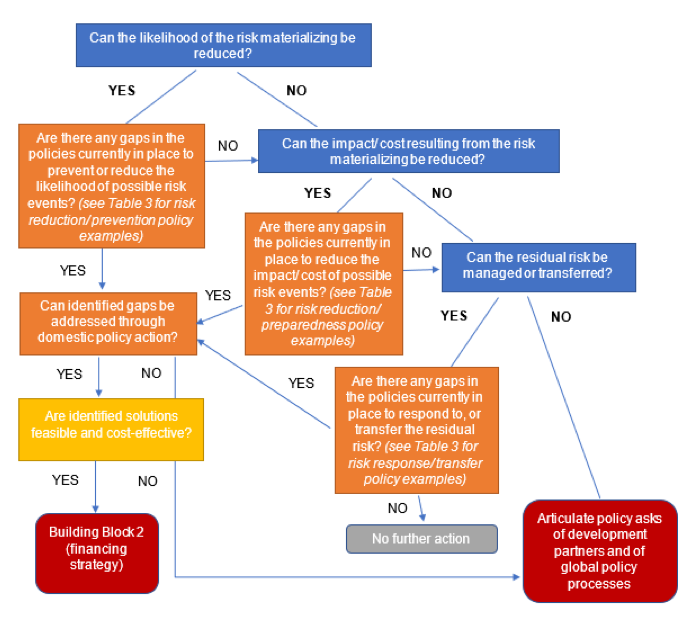
In identifying possible solutions, countries will have to determine the feasibility and cost-effectiveness of their implementation. It will depend on available resources and capacity, and societal risk aversion/ appetite. Eliminating all risk will be neither possible nor desirable, and trade-offs must be considered; for example, very high levels of deposit insurance and capital requirements may stifle credit creation and growth.
Assessments of likely costs and benefits (e.g. cost-benefit analysis) allows for evidence-based policy decisions. Such analysis typically involves: i) setting out alternatives (including comparing action and no action); ii) estimating benefits (transmission channels identified in step 2 could be a starting point for estimation of benefits, which can be defined as avoided damages, losses or extra costs); iii) calculating benefit to cost ratios; iv) carrying out a sensitivity analysis to account for uncertainties; and v) measuring impact on society (distributional or stakeholder analysis). In the disaster risk community, cost-benefit analyses have been applied in several cases to help choose among different disaster risk reduction measures.FN 14
Policy makers may also identify policy solutions that do not require substantial financial resources to implement, bearing in mind these may incur non-financial costs to specific actors and thus still require time and political capital to be pursued (e.g. changes to regulatory frameworks). As part of the financing strategy (building block 2), consideration may be given to how additional financing may be mobilised or made available to support expanded risk measures.FN 15
The fundamental role of social protection in achieving sustainable development outcomes is particularly evident when it comes to risk. A robust social protection system can enable countries to address underlying drivers of risk, such as poverty and inequality (risk prevention); reduce the negative impact of potential shocks, especially on the poorest and most vulnerable segments of the population (risk reduction); and facilitate a timely emergency response when a shock hits (residual risk management) due to the institutional mechanisms already in place that can be utilised in times of crisis too (e.g. cash transfer systems).
For example, during the COVID-19 pandemic, countries with social protection programmes in place were able to use them as channels for their response measures instead of having to establish new systems from scratch in a time of crisis. Chinese local governments were instructed to increase the benefit amounts of the national social assistance scheme; in Indonesia the same was done in relation to benefit amounts already in place to support adequate food consumption; in Ecuador, the channels of already existing social assistance programmes were used to disburse a contingency benefit that the government put in place to support workers in the informal economy.
Ultimately, social protection programmes increase resilience to shocks – of households, of economies and of countries’ ability to finance sustainable development priorities. Strengthening the interface between ministries of finance, social protection mechanisms, and forecast-based financing instruments can support resilient livelihoods pre-shock and minimize negative coping strategies in the event of a shock. By reducing the negative impact of shocks on households, social protection programmes ensure that the effect on national demand and productivity is curtailed and that recovery costs are minimised. Figure 7 illustrates the virtuous cycle of investing in social protection.
Figure 7. Decision tree to guide the identification of possible policy solutions
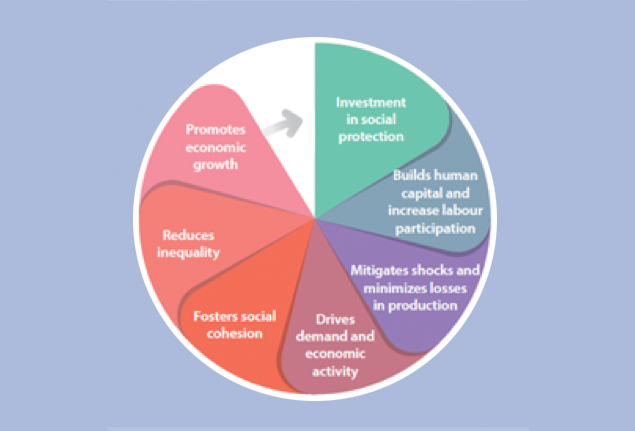
Source: UN ESCAP 2018, ‘Why We Need Social Protection’, Social Development Policy Guides
This section provides an overview of existing risk assessment tools and approaches from the international community. For ease of reference, they are grouped according to risk areas they cover (economic risks, non-economic risks, and cross-cutting).
Examples of existing economic risk assessment tools
Risks covered: Fiscal, Financial, Real, External, and Contagion (latter includes exposure through trade channels and cross-border financial sector exposure)
The IMF Country Risk Assessment Approaches are used as risk assessments for emerging markets (EM) and low-income countries (LIC), based on a common signal extraction approach, which assesses vulnerability to a crisis by establishing thresholds for key indicators and aggregating the indicators that exceed their thresholds. Depending on the country context different models are used. For example, for EM, a sudden stop model is used, which defines crises in terms of capital flows and emphasizes external indicators; for some LICs the food decline vulnerability index is used which examines natural events paired with declines in food production, food-dependence and governance indicators.
Risks covered: Fiscal (including at the instrument level in relation to guarantees and PPPs)
The IMF Fiscal Affairs Department Fiscal Risk Handbook includes tools and diagnostics for the assessment and management of risks for SOEs, public guarantees, quasi-fiscal activity, and public-private partnerships.
Risks covered: Fiscal
The IMF Fiscal Transparency Evaluations tool includes a pillar focused on fiscal risk analysis, management and disclosure, which provides ratings across 12 areas of fiscal risk management, including subnational risks for natural disasters, and is also used as basis for targeted, country level fiscal risk assessments by the IMF Fiscal Affairs Department.
Risks covered: Fiscal, External
This tool is used to guide borrowing decisions in LICs so that financing needs are considered alongside current and prospective repayment ability. Under the DSF, DSAs (see below) must be conducted regularly. The DSF analyses both external and public sector debt, focusing on the present value of debt obligations. Countries are classified into one of three debt-carrying capacity categories (strong, medium, weak) depending on their respective policy and institutional strengths, macroeconomic performance and buffers to absorb shocks. Indicators used draw on historical performance and outlook for real growth, international reserve coverage, remittance inflows, state of the global environment, and the World Bank’s Country Policy and Institutional Assessment (CPIA) index. Depending on the debt-carrying capacity different thresholds are used to establish level of risk.
Risks covered: Fiscal, External
The IMF Debt Sustainability Analysis tool includes: i) an analysis of a country’s projected debt burden over the medium-term (5 years), and its vulnerability to economic and policy shocks, based on stress test scenarios; ii) an assessment of the risk of external and overall public debt distress, based on indicative debt burden thresholds and benchmarks that depend on the country’s macroeconomic framework and other country-specific information.
Risks covered: Fiscal, Financial
The Credit Ratings Agency Reports on Sovereigns provide insight on default probabilities/ creditworthiness and assess future capacity and willingness to honour debt obligations, by looking at indicators of macroeconomic performance, public and external finances, as well as underlying structural factors that affect the country’s vulnerability and resilience to shocks, including political risk and governance factors.
Risks covered: Financial
The IMF Financial Sector Assessment program provides a comprehensive and in-depth analysis of a country’s financial sector (IMF and WB jointly responsible in developing and emerging economies; IMF alone in advanced economies). The analysis involves assessing the resilience of the banking and non-banking financial sectors; conducting stress tests and analysing systemic risks; examining micro and macro-prudential frameworks; reviewing the quality of supervision and financial market infrastructure oversight; and assessing development aspects such as inclusiveness, competitiveness, the quality of legal framework and of payment and settlement systems, and the financial sector’s contribution to economic growth and development.
Risks covered: External
The IMF External Balance Assessment Model estimates the average current account balance of an economy and compares it with a current account norm (derived by including desired, instead of actual, policies into the EBA model and refined to include country-specific factors not captured in the model). The difference between the actual and the norm, represents everything that drives an economy’s external balance away from its appropriate level – from inadequate macroeconomic policies to domestic distortions. If it’s greater than +/- 1% of GDP then the country’s external position is considered not to be in line with fundamentals.
Risks covered: Fiscal, Financial, Real, External (depending on context not all may be covered)
Article IV consultations provide an overview of key external and financial vulnerability indicators and include a risk assessment matrix (RAM) showing events that would materially alter the baseline path (which is the scenario most likely to materialize according to IMF staff). The RAM covers global and country-specific risks and includes an assessment of their likelihood and impact (low-medium-high) as well as related policy responses.
Risks covered: Systemic tail risks
This tool assesses low-probability but high-impact risks to the global economy and identifies policies to mitigate them, including those that would require international cooperation. Draws on a range of quantitative tools and expert consultations. While the scope is global, vulnerability indicators that assess individual country risks to macro, financial, fiscal and external crises are monitored, and findings can also inform the design of national level mitigation policies.
Risks covered: Financial
The UNCTAD Financial Conditions Indicators tool provides data on leading indicators of financial stress that allows policymakers to assess financial stability in real time before financial shocks are transmitted to the real economy. Can provide early warning of financial turmoil and inform a better understanding of likely and country-specific causes of financial shocks.
Risks covered: Fiscal risks related to use of PPPs
This tool assesses the costs and risks arising from PPP projects, with a particular emphasis on the medium- to long-term fiscal implications.
Risks covered: Financial
This tool sets out approaches and guidance for assessing risks related to money laundering (ML) and terrorism financing (TF). Organised around three steps: i) identification of threats and vulnerabilities that may be the causes, sources or drivers of ML/TF risks; ii) analysis of nature, sources, likelihood and consequences of identified risk factors; iii) evaluation to determine priorities/ strategies around prevention or avoidance, mitigation or reduction, acceptance/ contingency (for lower risks).
Risks covered: Financial
The World Bank ML/TF Risk Assessment Tool is a methodological tool that enables countries to identify the main drivers of ML/TF risks. It can support both diagnostics and decision-making around policy design, including through scenario analysis. It comprises several interrelated modules, built around input variables which can relate to threats or vulnerabilities, at a sector or national level.
Risks covered: Financial
This online tool can support an understanding of a country’s vulnerability to illicit financial flows and of the channels responsible for such vulnerability (including imports, exports, banking deposits, direct investment, and portfolio investment). Enables comparisons across countries and over time.
Examples of existing non-economic risk assessment tools
UNDRR/ISC Technical Report on Sendai Hazards Definitions and Classifications
Risks covered: Systemic risks, natural and man-made hazards
This tool provides an overview of hazards to be taken into account for comprehensive risk management and reduction, including risk assessments, scenario building, stress testing and policy, legal and regulatory frameworks.
Risks covered: Systemic risks, natural and man-made hazards, climate change
The Global Risk Assessment Framework (GRAF) is a network for integrated assessment of systemic risk and to facilitate partnerships for the generation and sharing of data across disciplines and geographies as a basis for the development of policies and actions. GRAF provides a coordinated and integrated approach to address systemic risks through multi-hazard and multidisciplinary assessment and understanding of risk. It supports the achievement of global targets across post-2015 agreements (including the Sendai Framework, 2030 Agenda, Paris Agreement, New Urban Agenda) and informs and focuses action at the local, national, regional and global levels, within and across sectors and geographies.
Risks covered: Systemic risks, natural and man-made hazards, climate change
The UNDRR National Disaster Risk Assessment tool supports a holistic assessment of the different dimensions of disaster risk (hazards, exposures, vulnerabilities, capacities); the direct and indirect impacts of disaster (physical, social, economic, environmental, institutional); and the underlying drivers of risk (climate change, poverty, inequality, weak governance, unchecked urban expansion). It includes guidance on the various methodologies that can be used to aggregate and compare risk from all hazards.
Risks covered: Climate change related disasters
The CCORAL Risk Management Tool provides an online support system for climate resilient decision-making. It supports policy makers to better understand how to manage the impacts of climate (through legislation, strategies, policy, planning and budgeting) and how to apply a climate risk management process in their specific country context. The CCORAL toolbox includes a variety of tools including vulnerability and risk assessments which users can choose from depending on their specific objectives.
Risks covered: Climate change and public health
This tool provides guidance for local and national governments to undertake vulnerability and risk assessments related to the impact that climate shocks and/or infectious disease outbreaks may have on critical assets and related essential services. Dedicated climate chapter outlines a methodology for developing risk-informed adaptation and mitigation strategies based on the unique exposure, adaptive capacity, risk tolerance and risk appetite of the local landscape. Specific health chapter focuses on how to create and implement an “Emergency Response Asset Management Action Plan” by enhancing existing precautions and protocols with affected service delivery from critical assets in mind. Entire handbook emphasizes the value of risk assessments in maximizing sustainability of public infrastructure investments for current and future generations.
Risks covered: Disaster
The INFORM Index for Risk Management tool is a global, open-source risk assessment for humanitarian crises and disasters. Ranks countries according to three dimensions of risk: hazard and exposure (natural and man-made, e.g. earthquakes, floods, conflict); vulnerability (socio-economic and of particular groups); and lack of coping capacity (institutional and infrastructure).
Risks covered: Disaster (drought)
The Africa RiskView Model is software used to estimate the number of people affected by a drought event during a rainfall season and the financing necessary to respond and support affected people in a timely manner. Combines crop monitoring and early warning, vulnerability assessment and mapping, operational response, and financial planning and risk management disciplines.
The Africa RiskView Model is software used to estimate the number of people affected by a drought event during a rainfall season and the financing necessary to respond and support affected people in a timely manner. Combines crop monitoring and early warning, vulnerability assessment and mapping, operational response, and financial planning and risk management disciplines.
Development outcome area: Indirect relation to specific sustainable development outcome areas/ SDGs.
The IMF Debt Sustainability analysis includes, among other things, an analysis of a country’s projected debt burden over the next 10 years, which can inform key challenges and opportunities in its overall financing landscape.
Risks covered: Disaster; climate change
This tool aims to provide Pacific Island Countries with disaster risk modelling and assessment tools and to facilitate dialogue on financial solutions for the reduction of their financial vulnerability to natural disasters and climate change. Specific tools include probabilistic hazard models; a risk information system; risk-based framework to direct resources of countries and development partners; and financing solutions related to fiscal risk exposure, financial disaster risk management and regional risk pooling.
Risks covered: Disaster; climate change
This tool is a bottom-up, ‘learning-by-doing’ vulnerability assessment approach. It focuses on current vulnerability to climate and non-climate related factors and on current adaptive capacity, and combines this with an evaluation of future climate related risks to support the formulation of strengthened adaptation policies.
Risks covered: Disaster (earthquakes, tsunamis, cyclones, floods, landslides, volcanic hazards)
The Central American Probabilistic Risk Assessment (CAPRA) Platform provides free-to-access software for probabilistic risk analysis. The platform calculates risk based on multi-hazard mapping exposure and physical vulnerability data; it makes use of cost-benefit analysis tools to support pro-active risk management and the design of risk-financing strategies.
Risks covered: Disaster
The Insurance Development Forum CatRiskTools catalogue is an online searchable catalogue of catastrophe risk assessment tools.
Risks covered: Disaster
This tool provides an interactive simulation model consisting of five modules: i) direct risk assessment; ii) fiscal resilience assessment; iii) fiscal and economic vulnerability; iv) economic impact assessment; v) risk management/ reduction option assessment. Support policy makers estimate and reduce public sector financial vulnerability in the face of catastrophes, and evaluate possible risk management options.
Risks covered: Political stability
The UNDG Conflict and Development Analysis (CDA) tool assists with analysing a specific context and developing strategies for reducing or eliminating the impact and consequences of violent conflict. It provides a deeper understanding of the driving factors of conflict and the dynamics that can promote peace.
Examples of existing cross-cutting risk assessment tools
UN Common Country Analysis (CCA)
Risks covered: Most relevant to external economic risks; environment and climate change; and political stability/ governance risks
The UN CCA represents the UN’s independent, collective, integrated, forward-looking and evidence-based analysis of the development context at the country level. While broader in scope compared to INFFs and while not exclusively a risk assessment tool, the new generation of CCAs are based on multidimensional risk analysis and methodologies and approaches can be used to inform analysis of particular country-level risks and vulnerabilities – namely those arising from:
- The structure of the economy (part of the political economy analysis approach);
- The environment (with a focus on environmental pressures and their drivers, health of marine and terrestrial ecosystems and biodiversity, and their respective linkages to climate change and environmental degradation)
Governance and institutional structure (including areas related to perceived credibility of electoral systems; perceived legitimacy of the government; transparency levels; independence and inclusiveness of state institutions and administration – all of which can provide valuable insight into political stability and governance risk factors).
Source: 20 Dec 2019 Draft CCA Companion
Risks covered: Economic, Disaster, Political, Environment/ Climate Change
This tool takes a multi-hazard, multi-stakeholder approach to address the complexity and interlinkages between different risks (e.g. how disasters can also trigger economic shocks); ensures resilience is vertically integrated at national, subnational, community and household layers; and promotes cross-sectoral approaches. The typical process involves:
- Understanding the risk landscape in the particular context
- Looking at how identified risks affect society’s systems (national, provincial, community, household, individual)
Determining how resilient these systems are and what needs to be done to boost resilience.
Risks covered: Economic, non-economicESCWA’s national SDG Financing
Simulators employ a set of econometric methods to simulate and assess the potential financing that can be mobilized and directed towards financing the SDGs (including from public, private, domestic, international, and innovative means of financing). The SDG Financing Simulators analyze the scale of revenues and resources alongside the potential to generate additional financing to meet national sustainable development plans and strategies associated with any given growth in output at the national level. The simulators allow policymakers to simulate economic and non-economic shocks and their possible impacts on particular financing channels (e.g., remittances, FDI, etc.), thus enabling consideration of risks to be factored in the SDG financing strategy. By doing so, the national simulators can guide policymakers in identifying the domains that need further anticipation and mitigation to enhance the resilience of the financing landscape.
5. Risk assessments in different country contexts
Sections 3 and 4 above already reflect on how the scope and focus of risk assessments will be influenced by specific country characteristics. In addition, the approach suggested in section 4 may need to be adapted depending on the following factors:
Range and depth of risk assessment tools and systems already in use. In some countries, governments will have risk reduction processes and systems in place and will be familiar with the risk assessment tools and approaches listed in Section 4.2. In others, the range of existing insight on risk may be insufficient or limited to particular types of shocks – in these cases, governments can seek support from development partners, such as the IMF and UN agencies, to undertake additional multi-sectoral and multi-hazard assessments that could help facilitate a more holistic understanding of all relevant threats to their financing system and related vulnerabilities.
Capacity and resource availability. Undertaking comprehensive risk assessments requires technical expertise, time and financial resources, both for the initial exercise when first designing an INFF and for ensuring continuous revisions to findings, as risk drivers, national capacity, and contextual factors change. In light of this, and in the face of potential limitations in capacity and resources that government may face, the scope of the exercise could be narrowed to focus on the most critical shocks and hazards, identified in consultation with experts familiar with the country’s context and financing system. However, in doing so, caution should be taken not to be reductive and overlook how risk changes over time, how economic, environmental, social, and political risks interact, and what new risks may emerge in future for which a country has no past experience. As above, development partners’ support may be sought to undertake the exercise.
6. Lessons learned
Key lessons from implementing comprehensive national risk assessments highlight the need for:
High level political support and government leadership to ensure the assessment exercise is sufficiently scoped (including time scale and range of different scenarios to be considered), adequately resourced (e.g. through guaranteed commitments of expertise, staff, time), and that findings can be translated into action (overcoming issues related to short-termism);
Coordination and engagement with national entities from as early as possible in the process to strengthen buy-in and ensure support for resulting policy actions;
Coordination with development partners to avoid siloed assessments;
A robust planning phase, including a review of learning from previous risk assessments, to ensure past experiences on what worked and what did not may be taken into account, and mistakes not repeated.
Country experience also shows that the process of bringing together information related to different types of risk can raise awareness of the links between them, increase collaboration across sectors (including within government), and promote new forms of cooperation (e.g. between policy makers and experts). It can encourage more effective and integrated planning at the sector level and support particular stakeholders (e.g. private sector actors) to take action for improved overall resilience.
Risk is defined here as the probability of an event (or hazard) occurring and its negative consequences, and a shock is the manifestation of such event. In the context of disaster risk in particular (see Report of the open-ended intergovernmental expert working group on indicators and terminology relating to disaster risk reduction (71/276)), this is spelled out as the potential loss of life, injury, or destroyed or damaged assets which could occur to a system, society or a community in a specific period of time, determined probabilistically as a function of hazard, exposure, vulnerability and capacity. Exposure is the situation of people, infrastructure, housing, production capacities and other tangible human assets located in hazard prone areas. Vulnerability refers to the conditions determined by physical, social, economic and environmental factors or processes which increase the susceptibility of an individual, a community, assets or systems to the impacts of shocks and hazards. Resilience is the ability of a system, community or society exposed to shocks and hazards to resist, absorb, accommodate, adapt to, transform and recover from their effects in a timely and efficient manner, including through the preservation and restoration of its essential basic structures and functions through risk management.
The Hazard Definition and Classification Review Technical Report (2020) provides a list of hazards that an INFF risk assessment should take into consideration as it relates to disasters.
Further information on the interrelations between financial risk and non-economic risk can be found in the 2019 2019 Global Risk Assessment Report.
Building Block 1 Assessment and Diagnostics: Overview provides a list of possible public and private institutions and actors that may be consulted and involved in INFF risk assessments to ensure comprehensive mapping of all relevant risks and a shared understanding of their interconnections and links to the financing system at risk.
Building Block 1 Assessment and Diagnostics: Overview includes a list of state and non-state actors, who should be involved or consulted to ensure all relevant voices are heard when mapping a country’s risk landscape and when assessing the potential impact of shocks and crises, including their possible consequences on the need for and availability of public finance.
The UNDRR National Disaster Risk Assessment guidelines (pp. 58-66) provide a detailed overview of different methodologies (with a specific emphasis on their application in relation to disaster risk).
This underpins the third pillar of IMF Fiscal Transparency Evaluations and is described in detail here.
See for example Box 4 in IMF (2016) Analysing and managing fiscal risks – Best Practices.
For a similar approach in asset management, see Chapter 6 of UN (2021) Managing Infrastructure Assets for Sustainable Development: A handbook for local and national governments.
For disaster risk specifically, disaster loss databases, including those related to monitoring of the Sendai Framework, can be consulted to estimate the scale of potential loss as well as the economic and financial impact of disasters.
For example, the Philippines Disaster Risk Reduction and Management Act of 2010 was enacted to develop a framework and allocate resources that would enable national and local government as well as other stakeholders to build communities that can survive disasters.
Table 3 in ‘IMF (2016) Analysing and managing fiscal risks – Best Practices’ provides examples of risk transfer instruments specifically related to fiscal risk, along with other measures to mitigate, provide for and accommodate fiscal risk.
For example, the Inter-American Development Bank’s Contingent Credit Facility for Natural Disaster Emergencies.
See more detail and examples in Annex 3 of the 2015 Global Assessment Report on Disaster Risk Reduction (section 4.5).
For example, ‘ILO (2019) Fiscal Space for Social Protection: A Handbook for Assessing Financing Options’ provides an overview of eight financing options for extending social protection coverage and benefits even in the poorest countries.
Country examples included in Box 3 were taken fromILO brief, May 2020, Social Protection Spotlight, ‘Social protection responses to the COVID-19 pandemic in developing countries: strengthening resilience by building universal social protection’.







.png)